
The Bristol Avon spans 75 miles through the south-west of England. The catchment has a population of approximately 1.5 million people. The river rises in South Gloucestershire on the southern edge of the Cotswold hills, flowing east through Wiltshire and draining through the West of England into the Severn Estuary at Avonmouth.
The Bristol Avon passes through many notable Wiltshire towns, including Malmesbury, Chippenham, Melksham, Trowbridge and Bradford-on-Avon before the river passes through Bath, Keynsham and Bristol in the lower reaches.

Rivers in the Bristol Avon catchment
The Hampshire Avon is a globally rare chalk stream characterised by crystal clear waters and an abundance and flora and fauna, including iconic species such as Atlantic salmon, water vole and otter. Rising north of Salisbury Plain in the Vale of Pewsey, the Hampshire Avon flows 77km south through Salisbury where the Avon joins with the Wylye, Nadder and Ebble before flowing south through the edge of the New Forest and into Christchurch harbour. It is the largest chalk stream catchment in England and has the reputation as the 'crown jewel' of English rivers.
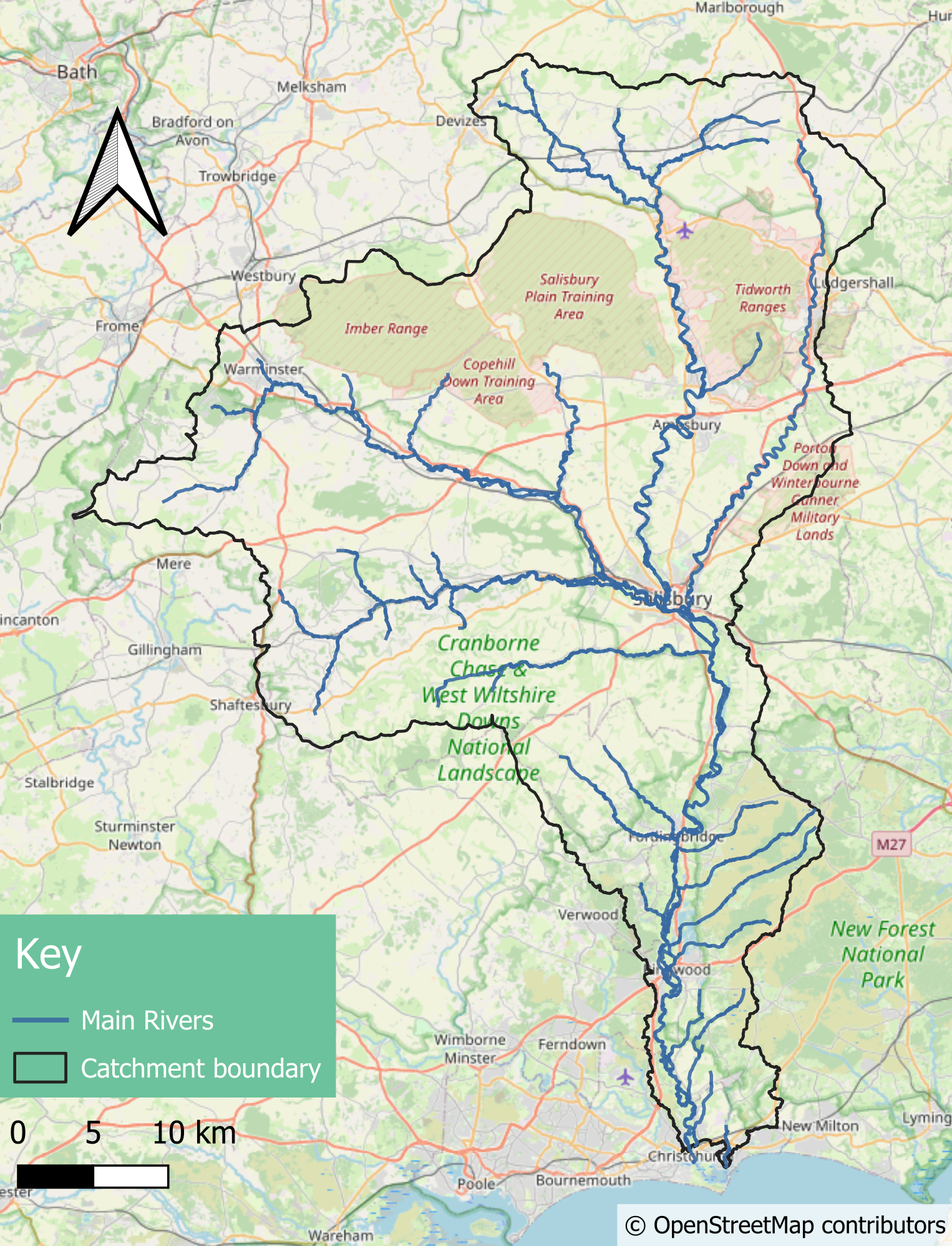
The Hampshire Avon catchment with rivers highlighted
River health is a complex topic and encompasses a variety of factors. The UK assesses river health using the EU's Water Framework Directive (WFD) classifications, where all waterbodies should achieve an overall classification of at least Good status. To obtain Good status, a river must meet good ecological and chemical status. There are a large number of water quality and other thresholds that a river water body needs to meet to be Good. These include elements such as:

Different factors that go into River Health classification
Factors that can affect the health and resilience of freshwater ecosystems include: